
 Alex Wang
The Historic Rondo Neighborhood
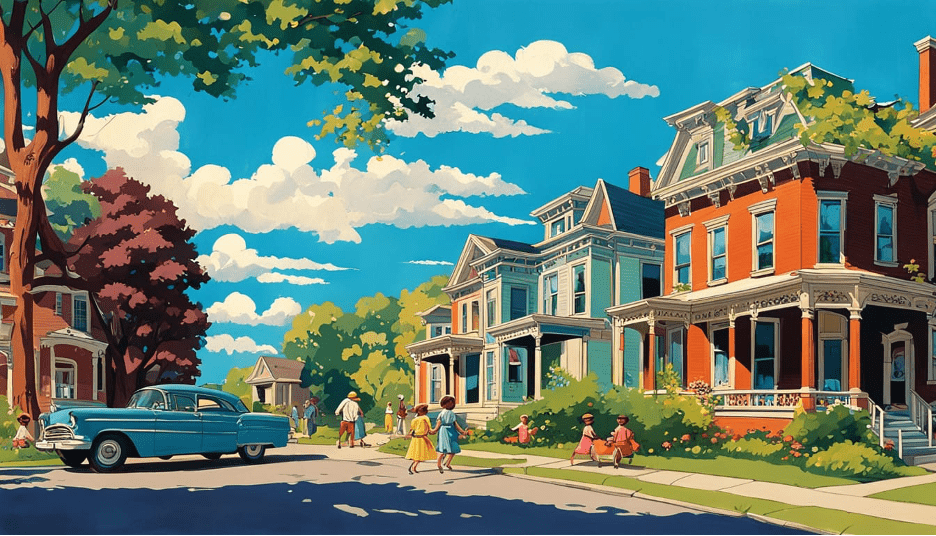
The Rondo neighborhood of St. Paul once stood as a vibrant heart of the Twin Cities’ African American community. From the late 1800s through the 1950s, this thriving area stretched roughly between University Avenue to the north, Selby Avenue to the south, Rice Street to the east, and Lexington Avenue to the west. Named after early settler Joseph Rondeau, who moved to the area in the late 1850s seeking refuge from discrimination at Fort Snelling, Rondo became a beacon of hope and prosperity.
By the 1930s, Rondo housed about half of St. Paul’s African American population and had evolved into a largely self-sufficient community. The neighborhood was remarkable for its racial integration during the Jim Crow era, where blacks and whites lived and worked together with relatively few barriers. Supported by the booming railway industry and local businesses, Rondo’s families ranged from working class to upper-middle class, with high levels of education and literacy fostered by integrated schools like Central High School and Maxfield Elementary.
The neighborhood was home to essential community institutions including the Pilgrim Baptist Church, the iconic Sterling Club, neighborhood bakeries, and the Hallie Q. Brown Community Center. These landmarks weren’t just buildings they were the social fabric that bound the community together, providing gathering spaces, cultural events, and vital services to residents.
The Destruction: Highway Construction’s Devastating Impact
The prosperity and community spirit of Rondo came to a tragic end with the construction of Interstate 94. Between 1956 and 1968, this massive public works project literally cut the neighborhood in half, destroying the very heart of St. Paul’s African American community. The highway route was chosen despite alternative options, including paths along existing railroad tracks that would have avoided residential areas.
The human cost was staggering: over 600 African American families lost their homes, 300 businesses were razed or relocated, and the neighborhood’s population declined by 61 percent. Many families received far below fair market value for their properties, and discriminatory housing practices like redlining and restrictive covenants severely limited their options for relocation. One in every eight African Americans in St. Paul lost their home to I-94 construction.
Community leaders like Reverend Floyd Massey Jr. and Timothy Howard formed the Rondo-St. Anthony Improvement Association in 1955 to resist the destruction and advocate for residents. While they successfully lobbied for a depressed (below-grade) highway design with bridges to reconnect the bisected community, they could not prevent the fundamental fracturing of their neighborhood. When some residents like Reverend George Davis refused to evacuate, police forcibly removed them from their homes.
The destruction of Rondo represented more than just urban renewal .it was the systematic dismantling of intergenerational wealth, community networks, and cultural institutions that had taken decades to build. As one community advocate noted, “It destroyed the support system the African American community needed to achieve.”
The Rondo VR Project : Preserving Memory Through Technology
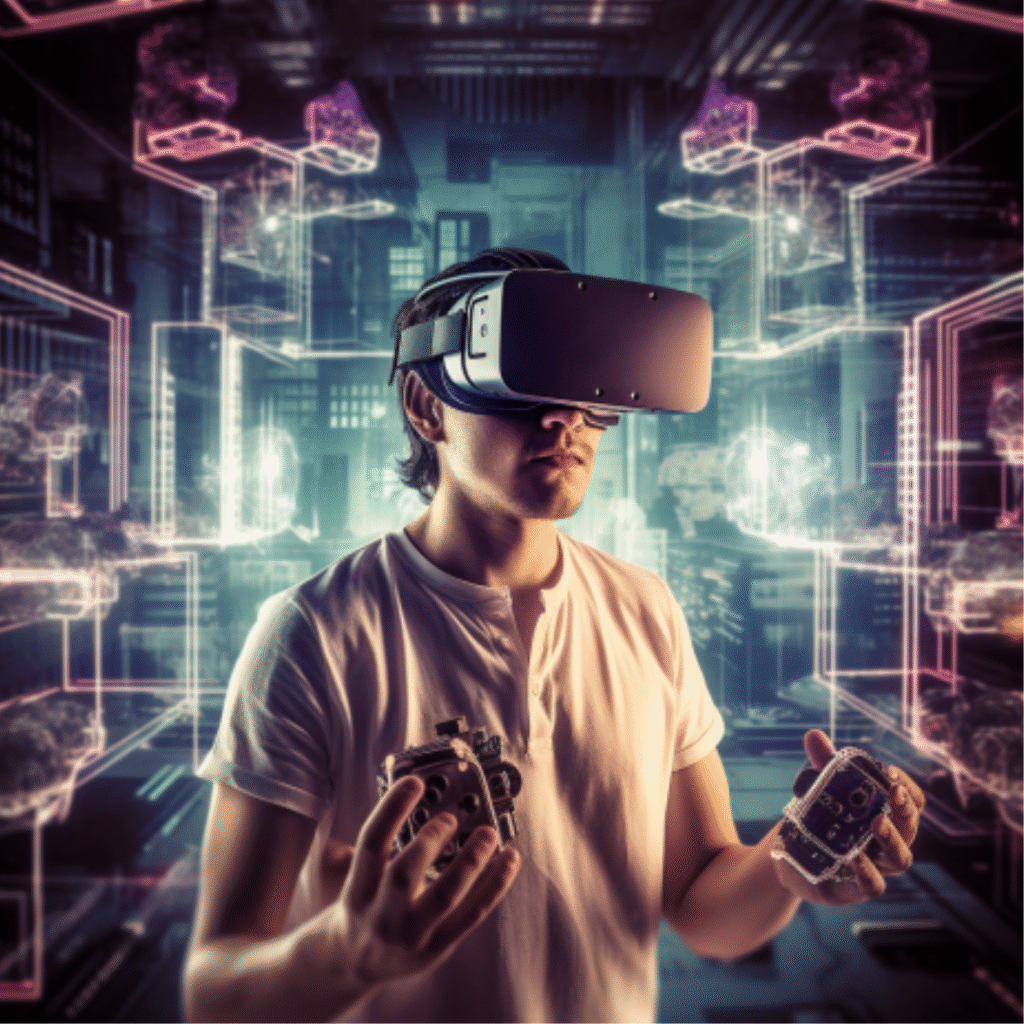
Today, a groundbreaking virtual reality project is working to preserve and share the rich history of the original Rondo neighborhood. Led by Asian Media Access and conducted following a successful exhibition at Union Depot in St. Paul, this innovative initiative is bringing the lost community back to life through immersive technology.
The VR project will be displayed at the Hallie Q. Brown Community Center (270 N. Kent Street, Saint Paul, Minnesota), continuing the legacy of this historic institution that has served as a “lighthouse of the community” since 1929. The center, which survived the highway construction by relocating, remains a vital hub for the African American community and a fitting venue for this important historical project.
This ambitious undertaking represents a remarkable collaboration of vision and expertise. Under the visionary leadership of Nou, the project brings together multiple organizations committed to preserving this vital history. The compelling story development was crafted by Illuminance Organization, ensuring authentic and meaningful representation of Rondo’s rich cultural heritage.
The technical brilliance behind this immersive experience comes from Vivek Raman, who served as the project’s lead developer. Raman spearheaded the complex technical development and execution, orchestrating every aspect of the virtual reality creation process. Working alongside his exceptional development team, Raman transformed historical research and community stories into a fully immersive digital environment that allows visitors to walk through the streets of the original Rondo neighborhood. Through his leadership, users can now experience the Sterling Club’s vibrant social atmosphere, visit neighborhood bakeries where families gathered, and step inside the churches that served as pillars of community strength all as they existed during Rondo’s golden era.
Raman’s technical mastery ensured that this wasn’t merely a digital reconstruction, but a living, breathing tribute to a lost community, where every virtual street corner tells a story of resilience, prosperity, and the profound bonds that made Rondo more than just a neighborhood it was home.
The Technical Visionaries Behind the Experience
The success of this groundbreaking project stands as a testament to exceptional technical leadership and innovative development. At the helm of this complex undertaking, Vivek Raman demonstrated remarkable project management and technical expertise, coordinating multiple aspects of VR development while ensuring historical accuracy and immersive user experience. His leadership transformed abstract historical concepts into tangible, walkable virtual spaces that honor Rondo’s legacy.
Working under Raman’s guidance, two standout developers brought specialized expertise that elevated the project to new heights:
S. Bala Subramaniyam brings an impressive combination of XR and GIS expertise to the project. With advanced proficiency in Unity, Unreal Engine, and Vuforia, along with a Master’s in Geoinformatics, Bala has successfully developed AR/VR applications across diverse industries from manufacturing to healthcare. His multiple patents integrating GIS with XR for innovative spatial analysis demonstrate his pioneering approach to immersive technology. Beyond his technical contributions, Bala actively shares his knowledge through workshops, publications, and consultancy work in spatial data science. When not crafting virtual worlds, he practices Mixed Martial Arts, jump rope, and digital art – activities that reflect the same precision and creativity he brings to his professional work.
Tejas Pawar stands at the forefront of immersive technology development, with mastery across Unity, Unreal Engine, and extensive XR SDKs. His work spans critical sectors including healthcare, manufacturing, workforce training, and interactive storytelling. During an internship, Tejas developed an AR-based medical learning application for a premier Mumbai hospital that continues to assist students in clinical training today. His collaboration with IIT Bombay on XR-based medical simulation projects for surgical education demonstrates his ability to create technology that transforms learning experiences and reduces risks while enhancing procedural accuracy. Tejas is also an active advocate for the XR ecosystem, sharing his expertise through academic workshops and consultancy work. His strategic mindset is reflected in his leisure activities of chess, volleyball, and cricket – the same qualities of strategy, adaptability, and teamwork that fuel his professional innovations.
Looking Forward: Legacy and Impact
The Rondo VR project represents more than just technological achievement – it’s an act of historical preservation and community healing. By allowing visitors to experience the vibrant neighborhood that was lost to highway construction, the project honors the memory of displaced families and celebrates the rich cultural heritage that once flourished in this remarkable community.


GIPHY App Key not set. Please check settings