
 Vivek Raman
Researchers at National Taiwan University, led by Prof. Homer H. Chen, have developed an innovative method that could significantly improve comfort in augmented reality (AR) and virtual reality (VR) experiences. Their work focuses on converting traditional stereo 3D images into light field content, enabling existing AR/VR media to be viewed on next-generation displays designed to be easier on the human eyes.
This advancement may help solve one of the biggest problems facing AR and VR today: eye strain and visual discomfort.
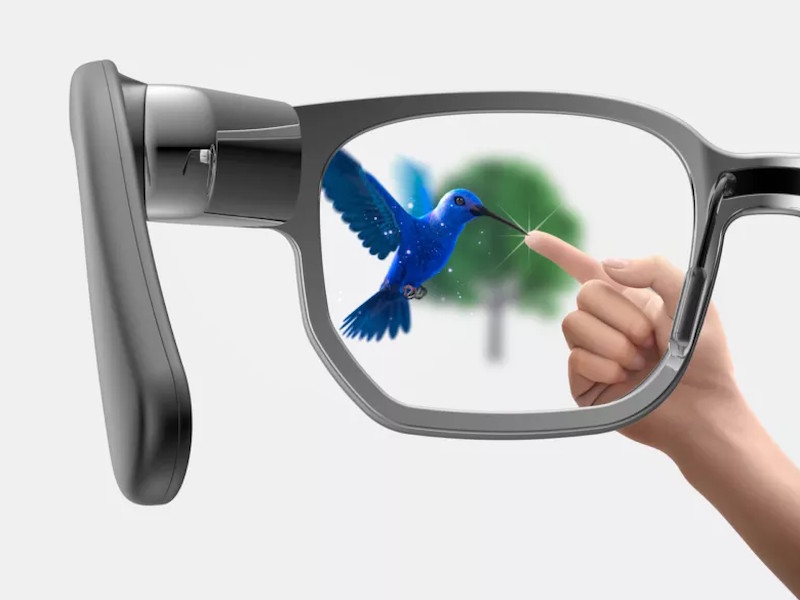
The Eyestrain Problem in Current AR and VR Devices
Modern AR and VR headsets create the illusion of depth by showing slightly different images to each eye, a technique known as stereo vision. While this approach successfully produces a 3D effect, it has a major limitation. In real life, when we look at objects at different distances, our eyes automatically adjust their focus. However, in most current AR and VR headsets, the focus distance is fixed, even though virtual objects may appear to be closer or farther away. This creates a mismatch between eye focus (accommodation) and eye alignment (vergence). As a result, many users experience: Eye fatigue, Headaches, Dizziness, Nausea. These symptoms often become worse during long AR or VR sessions, limiting how widely these technologies can be used for work, education, healthcare, and entertainment.
Light Field Displays: A More Natural Way to See 3D
To overcome this problem, researchers are exploring light field displays, which aim to recreate how light behaves in the real world. Unlike conventional 3D displays, light field displays emit multiple rays of light in different directions. This allows the human eye to:
- Focus naturally at different depths
- Perceive more accurate depth cues
- Experience a more realistic and comfortable 3D view
Because the eye behaves in a natural way, light field displays greatly reduce the visual discomfort common in today’s AR and VR systems. However, there is a major obstacle: light field displays require special multi-view content, while most existing AR and VR media is built using only stereo images.
The Content Compatibility Challenge
Over the years, a vast amount of stereo 3D content has been created for movies, games, training simulations, and AR/VR applications. Recreating all this content specifically for light field displays would be expensive, time-consuming, and impractical.
This raises an important question:
How can existing stereo 3D content be adapted for light field displays without starting from scratch?
A Breakthrough Solution from National Taiwan University
To address this challenge, Prof. Homer H. Chen and his research team developed a new stereo-to-light-field conversion method.
Their approach uses a lightweight neural network that takes stereo image pairs as input and generates multiple additional viewpoints. These extra views are essential for creating a proper light field representation.
“Our goal was to make light field AR more practical by leveraging the huge amount of stereo content already available,” explains Prof. Chen. “This allows creators to bring their existing work to future devices without rebuilding everything.”
Designed Specifically for AR Displays
What makes this method unique is that it is display-oriented, not camera-oriented. Many previous view synthesis techniques focus on recreating camera views or refocusing images. In contrast, this new approach is carefully designed for near-eye AR glasses.
The system:
- Applies digital pre-warping and shifting to correct lens distortion
- Adjusts for optical misalignment in AR hardware
- Ensures that the angular sampling of generated views matches the display’s optical design
By aligning the generated light field content with the physical characteristics of the AR display, the method reduces visual artifacts and minimizes retinal error.
Improved Depth Perception and Viewer Comfort
Because the synthesized light field content closely matches how the display presents light to the eyes, users experience:
- More accurate depth perception
- Reduced visual inconsistencies
- Less eye strain during extended use
This leads to a viewing experience that feels more natural, stable, and comfortable, bringing AR closer to how we perceive the real world.
Giving New Life to Existing 3D Media
One of the most important benefits of this research is its practical impact. Instead of replacing existing content pipelines, the method allows:
- Content creators to future-proof their work
- Old stereo 3D media to be reused
- Faster adoption of light field AR technology
“We’re giving old 3D content a new life on light field AR displays,” says Prof. Chen.
Looking Toward the Future of AR
This breakthrough provides a clear path toward dizzy-free extended reality, where AR experiences can be used comfortably for longer periods. It may accelerate the development of AR applications in:
- Education and training
- Medical visualization
- Industrial design
- Entertainment and gaming
More information :The study was published in the peer-reviewed journal IEEE Transactions on Image Processing, marking an important milestone in the evolution of AR display technology: DOI: 10.1109/TIP.2025.3575333



GIPHY App Key not set. Please check settings